When I made the decision to write during my year abroad, I made one simple promise to myself: Do not become a ‘What to do in X, Y, Z in 24 hours’ writer. I vowed to find most the interesting and unexplored sides of cities and divulge those instead. However, there are ordinary cities and then there is Verona. In desperately seeking to avoid using the ‘The City of Love’ cliché, I realised that only the arrogant could wholly ignore this term.
Admittedly, my account of Verona is based solely on a one-day visit and, undeniably, whilst drunk on the excitement of the spectacular September weather. I must start by stating that Verona is truly a dreamlike city.
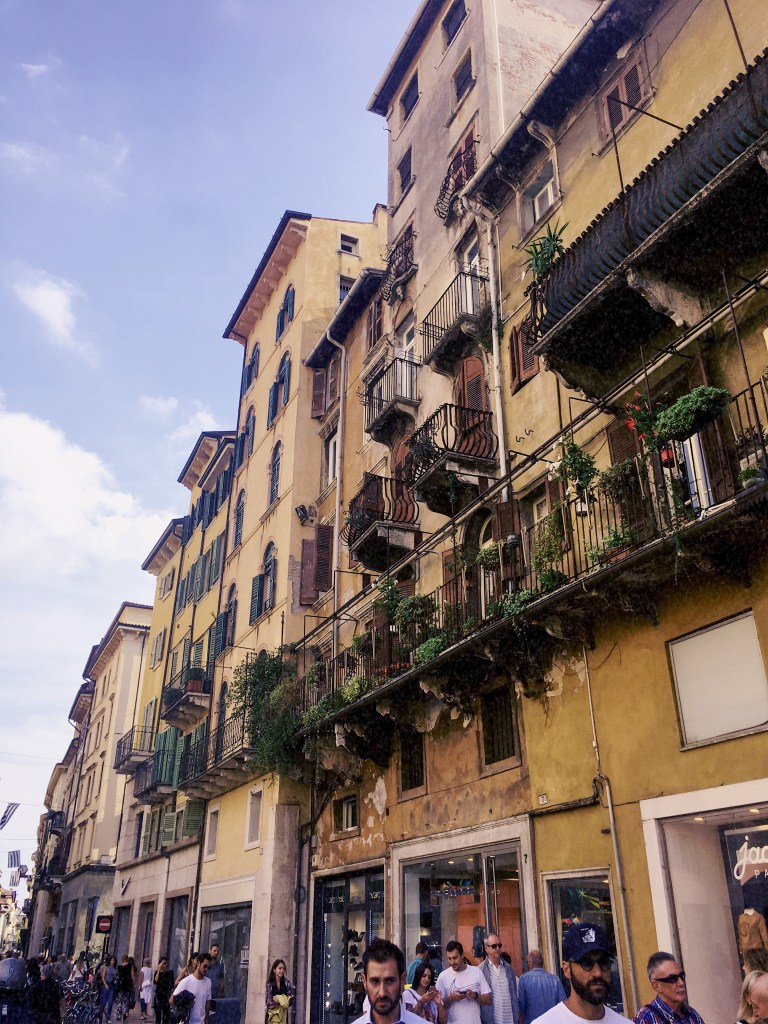
The narrow, cobbled backstreets contrast with the sheer magnitude of the Arena in the city centre, with buildings dating back to as early as the 12th century. The display of Gothic, Shakespearean and Renaissance architecture is juxtaposed by the everchanging fashions of Europe throughout the years. Late in September, Piazza Brà is still bursting with tourists and locals, all debating which Osteria to dine at and drawn in by the charismatic waiters. With such an infamous title, it would be devastating if Verona failed to live up to its label. Thankfully, I can confirm that I have never visited a place where happiness and love radiate so strongly. Verona ranks highly amongst my favourite Italian cities.
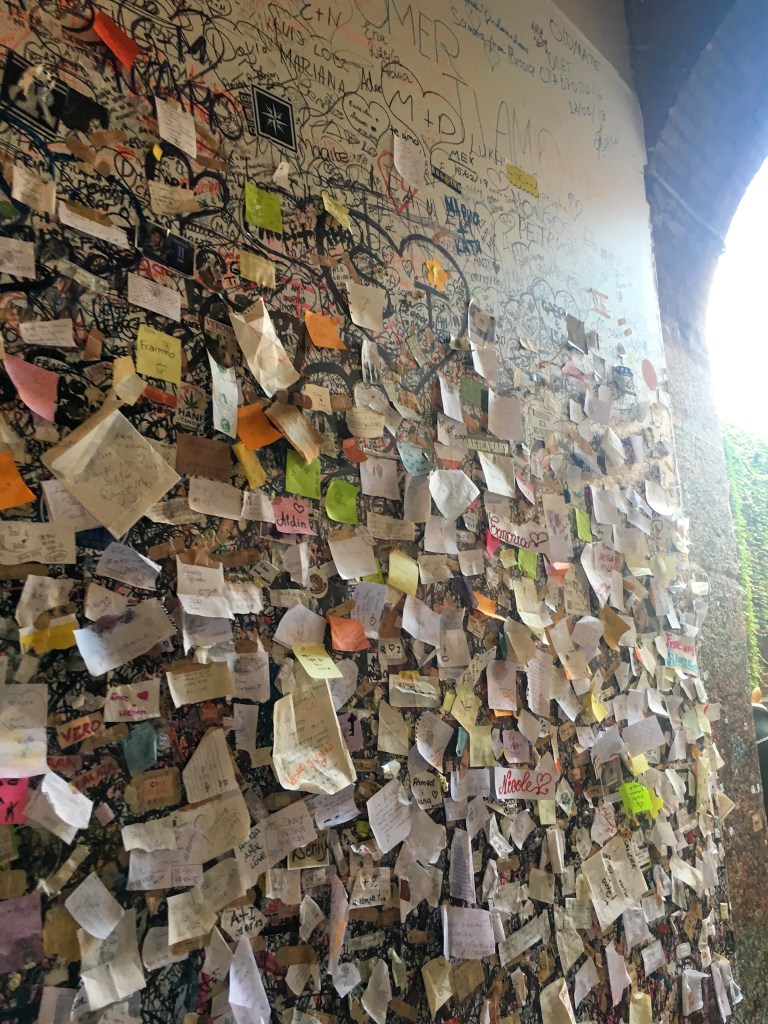
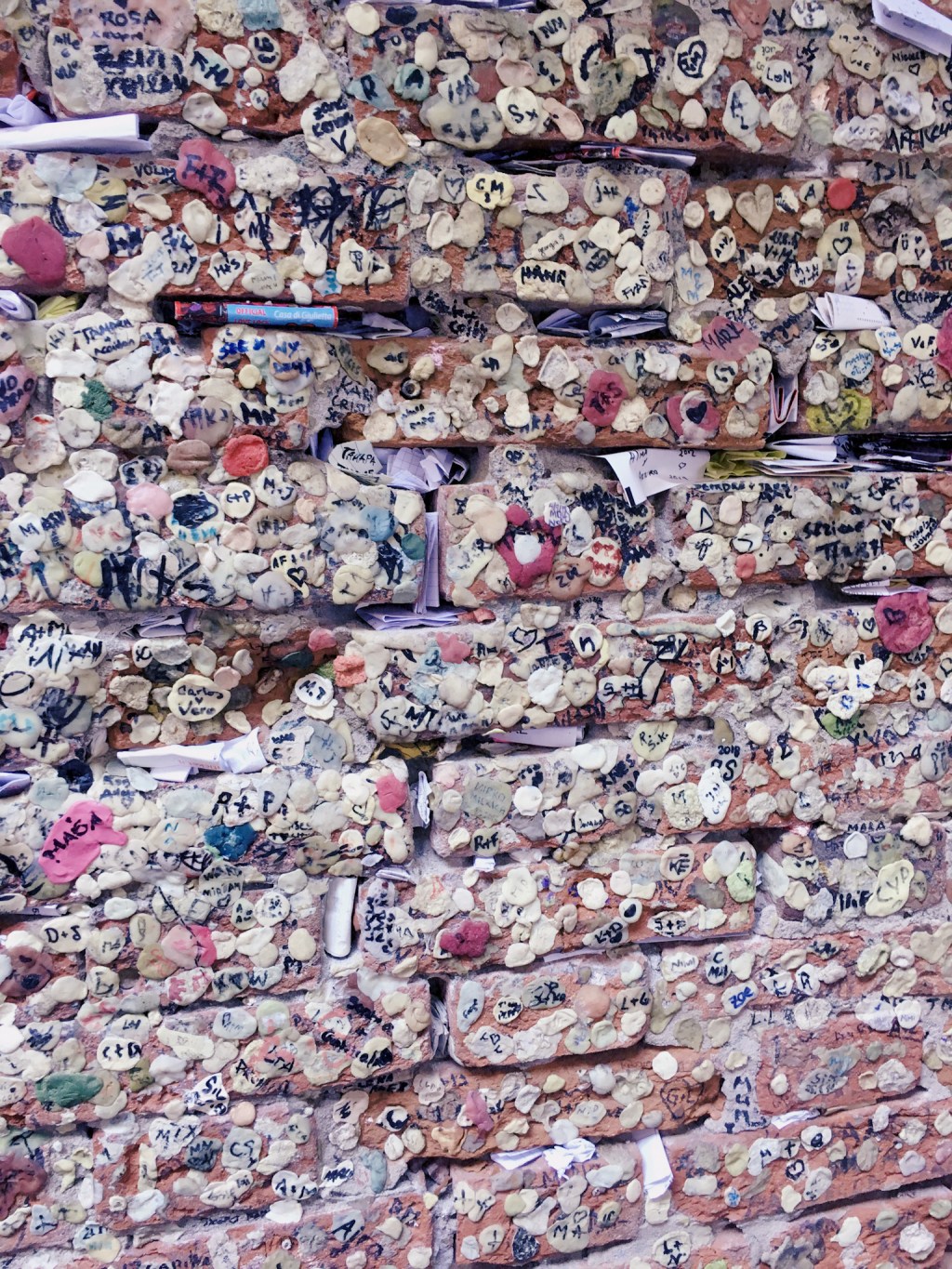
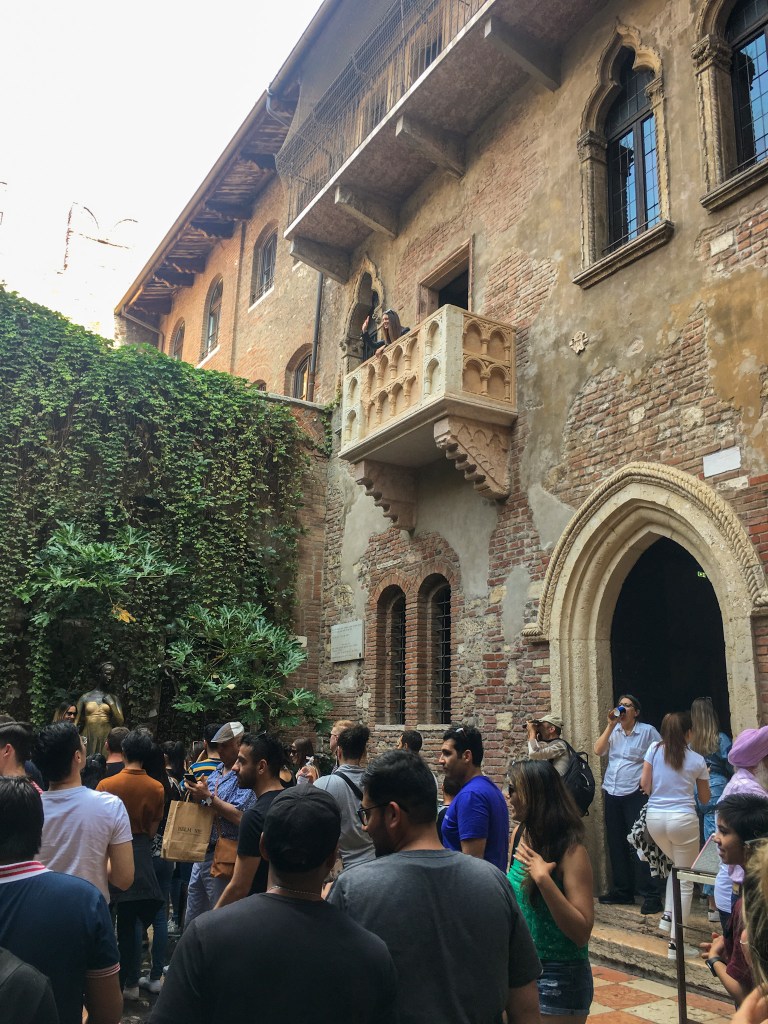
As you make your way through the city, the volume of people intensifies as you edge closer to Juliet’s balcony. The inspiration for Romeo and Juliet’s celebrated scene is located in the heart of the city and does not disappoint. Upon entering the tunnel decorated with love letters; you are presented with the Casa di Giulietta. When visiting with a friend as two extremely single young women, a degree of scepticism arose as we approached the iconic “Wherefore art thou Romeo?” balcony, as the anticipation that love was really in the air was quite daunting. However, to our astonishment, we found the hundreds of thousands of love letters, confessions and heart-breaking notes addressed to Juliet truly remarkable. Aside from their content, the imagination required to find suitable material to record such moments cannot be overlooked; from sanitary pads to plasters, pieces of used chewing gum to train tickets. Humanity’s softer side was apparent. When inside the courtyard of Casa di Giulietta, we found the clear impact of untainted love overwhelming. Notes of adoration provide pleasant reading, even whilst instilling in us an innate sense of loneliness. The bronze statue of Giulietta, where hordes of people queue to pose and rub her breast for luck in love, stands proudly below the balcony.
Putting our singleness to one side, I pose the questions: Is the passion rife in Verona thanks to or the reason for Romeo and Juliet’s success? Did Will Shakespeare choose Verona as the setting for his tragedy because of the love that lingers in the air? Hang on, did Shakespeare ever even visit Italy?! Academics have noted that Italy, which is famed for being a impassioned nation, was often the setting for Shakespeare’s plays. Aside from the popular belief that warmer climates give way to passion, Italy has always been associated with romance. Shakespeare confirms this in prose as Mercutio teases Romeo, imitating Petrarch’s language and his romantic sonnets. Juliet’s provocative language, in comparison to that of English women at the time, further suggests that Italian women were seen to be more lustful and erotic. While the questions I pose may draw differing answers, I believe we can all conclude the following: passion, brilliance and romance are deeply rooted in Veronese people and their city.
Today, as the media struggles to bring little but doom and gloom to the public, it is important to remember mankind’s saving graces. In this case, Verona’s very existence. Why is Verona such an encaptivating city? How can one city inspire so much joy? Will the city ever lose its touch? The answer to all of these questions can be summed up in one word: inspiration. Whether you view Verona as inspiration to fulfil your childhood fairy-tale fantasy, to muster the courage to follow your heart, or simply to revel in the tranquil Italian culture. Verona should be recognised as an exceptionally stimulating city, which, when travel is permitted again, should be at the top of every traveller’s list.
© S R D HILL
 Not Sophia Loren
2 responses to “Verona: More than a cliché?”
Fabulous Tink
Sent from my iPhone
>
LikeLike
Great piece on Verona. Keep up this excellent work.
LikeLike